Atlas Copco Air Compressors


What Is Variable Speed Drive Air Compressor?
What Is Variable Speed Drive Air Compressor?
Many factories use air compressors that run at fixed speed. When air demand changes, these compressors still operate at full speed and rely on loading and unloading cycles to control pressure. This often causes energy waste, pressure fluctuations, and increased mechanical wear.
A Variable Speed Drive (VSD) air compressor uses variable frequency technology to adjust motor speed according to real-time air demand, allowing the compressor to produce only the amount of air required by the system.
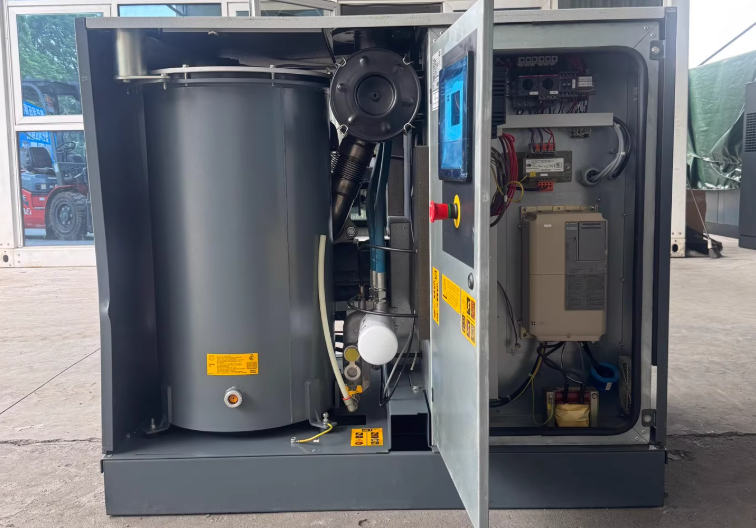
Because compressed air systems often operate continuously, energy consumption becomes one of the largest operating expenses in industrial facilities. Variable speed compressors are designed to reduce this cost while improving pressure stability and equipment reliability.
How It Works
Traditional air compressors operate at a constant motor speed determined by the power grid frequency, typically 50 Hz or 60 Hz. The compressor alternates between loading and unloading to maintain system pressure.
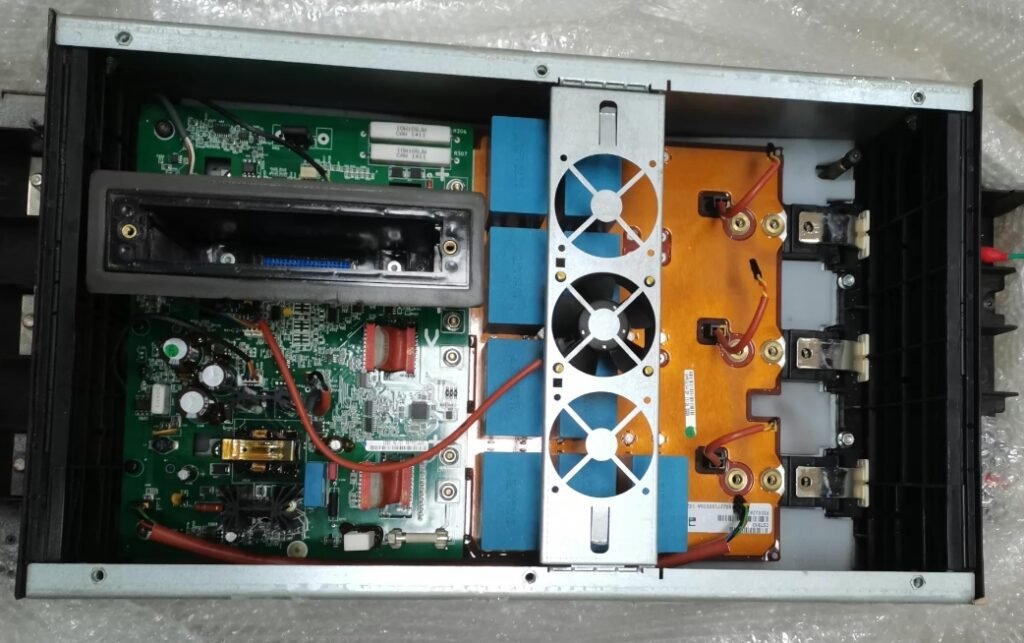
A Variable Speed Drive compressor uses a built-in frequency converter to adjust the motor power supply frequency, which changes the motor speed and allows continuous control of air output.
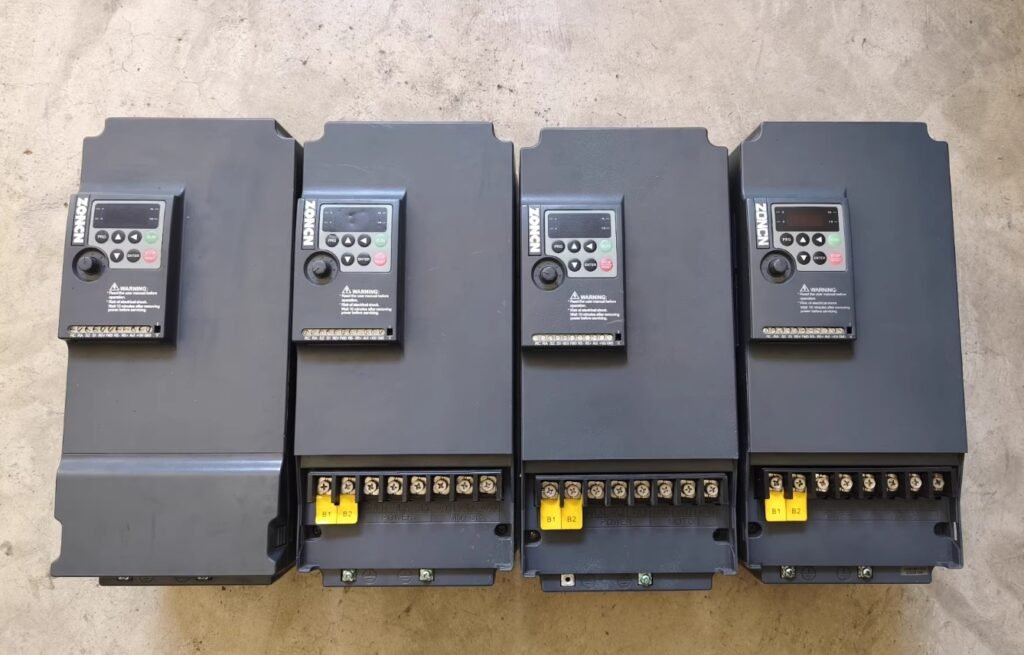
In simple terms, the compressor increases speed when air demand rises and slows down when demand drops. This ensures that the compressor output always matches the actual air consumption of the system.
Comparison Between Fixed Speed and VSD Compressors
| Operating Mode | Fixed-Speed Compressor | VSD Compressor |
|---|---|---|
| Motor speed | Constant full speed | Continuously adjustable |
| Pressure control | Load / unload cycles | Stable constant pressure |
| Energy efficiency | Energy lost during unloading | Energy used only when needed |
| Mechanical wear | Frequent start-stop cycles | Reduced mechanical stress |
By maintaining constant pressure, VSD compressors often stabilize the system pressure at levels such as 0.7 ± 0.02 MPa, which is beneficial for many pneumatic systems.
Advantages of Variable Speed Drive Air Compressor
One of the main reasons industries adopt VSD compressors is the significant improvement in energy efficiency and operational stability.
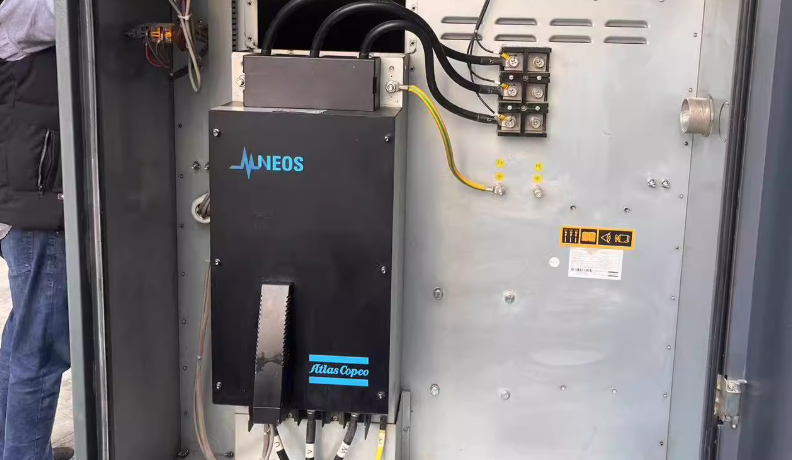
Compared with traditional fixed-speed compressors, VSD compressors provide lower energy consumption, smoother operation, and longer equipment life.
Key Advantages
| Advantage | Description | Industrial Benefit |
|---|---|---|
| Energy saving | Typically 20–50% lower power consumption | Reduced electricity costs |
| Constant pressure | Pressure fluctuation ≤ ±0.1 bar | Stable production quality |
| Soft start | No large inrush current | Less stress on power grid |
| Reduced wear | Fewer start-stop cycles | Longer equipment lifespan |
| Lower noise | Lower speed under partial load | Suitable for indoor factories |
Energy savings are especially significant in factories where air demand fluctuates throughout the day or across different production shifts.
What Variable Speed Drive Air Compressors Are There
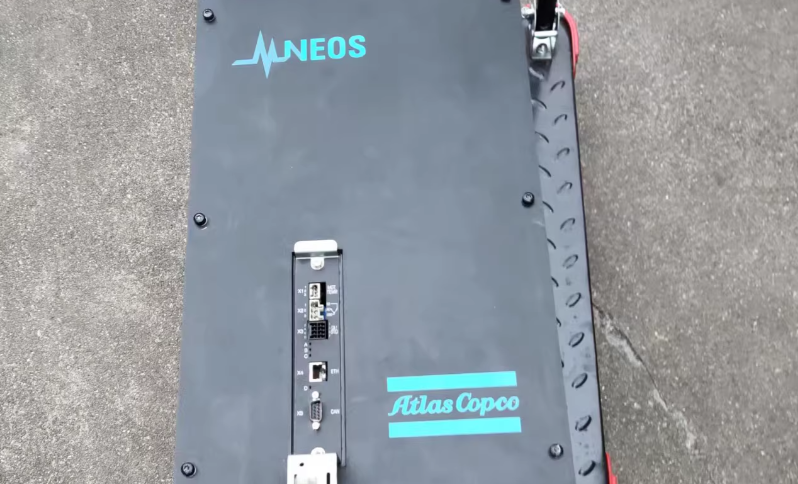
Several different technical configurations are used for variable-speed compressors. These designs mainly differ in motor type and efficiency level.
Main Types of VSD Compressors
| Type | Technology | Characteristics |
|---|---|---|
| Ordinary VSD | Asynchronous motor + frequency converter | Good cost performance |
| Permanent magnet VSD (PM/VSD+) | Permanent magnet synchronous motor | Higher efficiency and lower energy loss |
| Oil-cooled permanent magnet VSD | Direct-drive motor with oil cooling | Highest efficiency and minimal transmission loss |
Permanent magnet variable-speed compressors are increasingly common in modern high-efficiency industrial systems because they provide better performance at low speeds and improved energy efficiency levels such as IE4 or IE5.
Variable Speed Drive Air Compressor Applicable Scenarios
Variable-speed compressors perform best in systems where compressed air demand is not constant.
Factories with fluctuating air consumption or strict pressure stability requirements usually benefit the most from VSD technology.
Typical Application Conditions
| Scenario | Reason for Using VSD |
|---|---|
| Large demand fluctuations | Compressor output automatically adjusts |
| Multi-shift production | Air consumption changes during shifts |
| High electricity costs | Energy savings reduce operating expenses |
| High pressure stability requirements | Ensures consistent compressed air supply |
| Multi-compressor systems | VSD unit can act as regulating machine |
Industries such as electronics manufacturing, pharmaceutical production, and food processing often require stable air pressure and efficient energy use.
Notes
Although variable-speed compressors provide many advantages, certain factors should be evaluated before selecting this type of equipment.
Proper installation conditions, electrical system compatibility, and professional maintenance are important for long-term system reliability.
Important Considerations
| Factor | Description | Recommendation |
|---|---|---|
| Initial investment | VSD compressors usually cost 20–40% more than fixed-speed models | Energy savings often recover cost within 1–3 years |
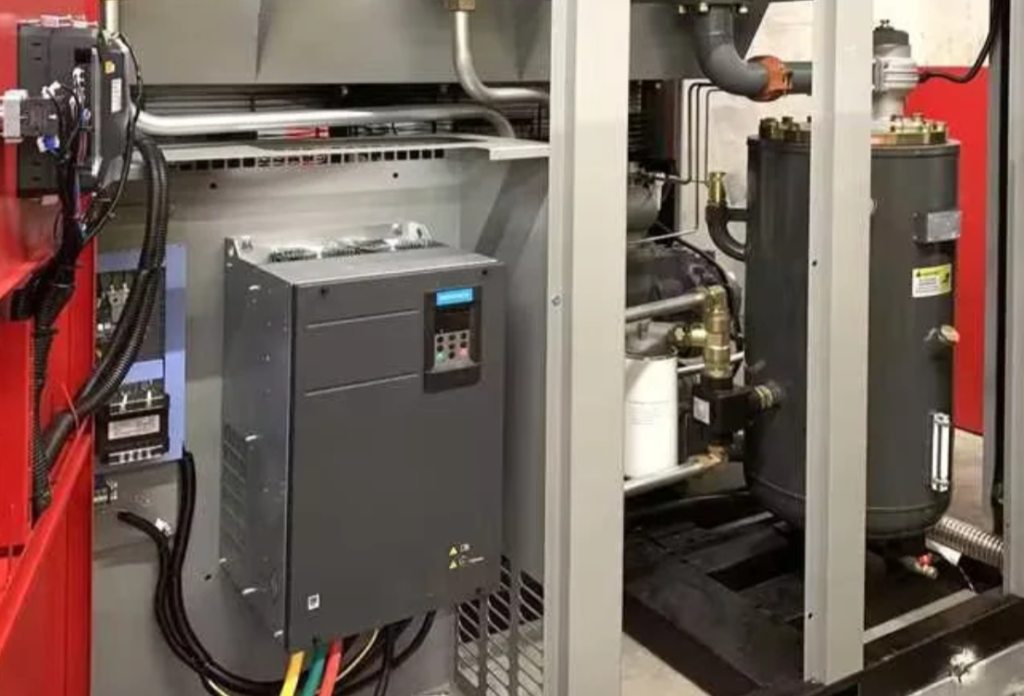
| Electrical environment | Frequency converters may create harmonic interference | Install reactors or filters if required |
| Maintenance requirements | Frequency converters and PM motors require professional service | Use certified technicians |
Despite these considerations, many industries adopt VSD compressors because their energy savings and stable performance provide long-term operational benefits.
Conclusion
Variable Speed Drive air compressors represent an important advancement in modern compressed-air systems by improving energy efficiency, stabilizing pressure, and extending equipment lifespan.
By matching compressor output to real-time air demand, VSD technology helps factories reduce energy consumption, lower maintenance costs, and maintain reliable compressed-air supply for industrial production.