Atlas Copco Air Compressors

Oil-Injected vs Oil-Free Screw Air Compressors: How to Choose
Choosing between an oil-injected and an oil-free screw air compressor is one of the most important decisions when you invest in compressed air. Both are rotary screw machines, but they solve very different problems. This guide explains how each type works, where each belongs, and how to pick the right one for your plant.
How oil-injected screw compressors work
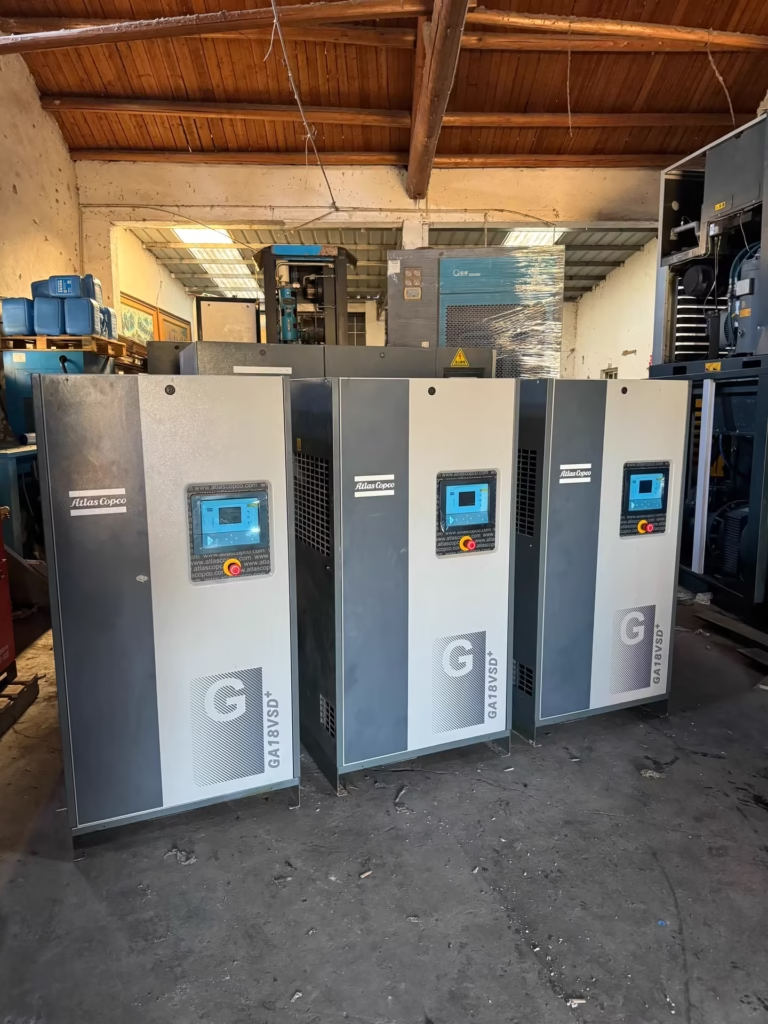
In an oil-injected (also called oil-lubricated or oil-flooded) screw compressor, oil is injected directly into the compression chamber. That oil lubricates the rotors, seals the internal clearances, and carries away the heat of compression. Downstream, an oil separator removes almost all of the oil before the air leaves the machine, leaving only a trace oil carry-over (typically 1–3 mg/m³). Atlas Copco’s GA series is the classic example.
Because the oil handles both sealing and cooling, these machines are simple, durable and energy-efficient — which is why oil-injected screw compressors run the majority of factories worldwide.
How oil-free screw compressors work
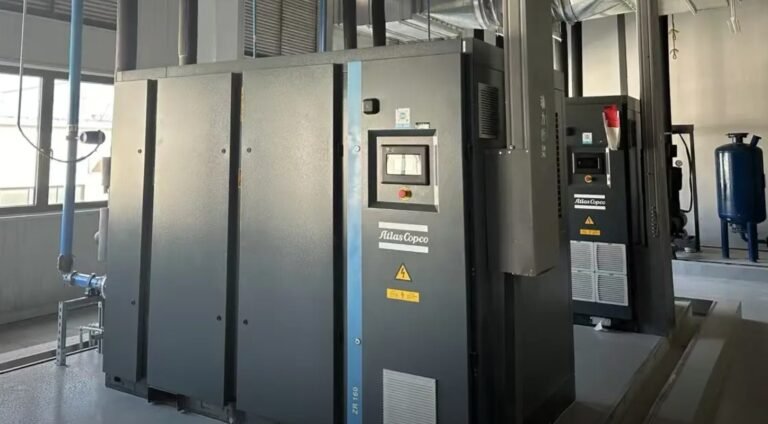
An oil-free (or “Class 0”) screw compressor compresses air with no oil in the compression chamber at all. Sealing and cooling are handled instead by precision-machined rotors, special coatings, timing gears and often water or air cooling between stages. The output is air with zero oil contamination, certified to ISO 8573-1 Class 0. Atlas Copco’s ZT and ZR oil-free range is built for exactly this.
Oil-injected vs oil-free: the key differences
- Air purity: oil-injected leaves a trace of oil; oil-free delivers 100% oil-free, Class 0 air.
- Upfront cost: oil-free machines typically cost 30–60% more for the same flow.
- Energy efficiency: oil-injected is generally more efficient per unit of air delivered.
- Maintenance: oil-injected is simpler and cheaper to service; oil-free needs specialised parts and skills.
- Risk profile: with oil-free there is zero chance of oil contaminating your product or process.
Which one do you actually need?
Choose oil-free only if your process genuinely cannot tolerate any oil in the air. Typical Class-0 applications include:
- Food & beverage production
- Pharmaceutical, medical and laboratory use
- Electronics and semiconductor manufacturing
- Textiles
- Critical spray-painting and coating
- Breweries and dairies
For almost everything else — general manufacturing, metalworking, automotive workshops, woodworking, pneumatic tools, packaging and sandblasting — a quality oil-injected screw compressor with the right filtration is the more economical and reliable choice.
A cost-saving middle path
Many plants run an efficient oil-injected compressor and add downstream filters and dryers to reach the exact air quality a specific line needs, instead of paying for a fully oil-free machine across the whole facility. If only one process needs Class 0 air, this hybrid approach usually saves a lot of money. If you also have a fluctuating load, pairing this with a variable-speed model can cut energy further — see what a variable speed drive compressor is.
Our recommendations
Oil-injected: GA11, GA22, GA37, GA55, GA75 and variable-speed GA75 VSD.
Oil-free: ZT37 VSD, ZT55 VSD and the large ZR160 VSD.
As a China-based Atlas Copco supplier, CATC stocks both oil-injected and oil-free units, new and shipped worldwide. Tell us your application and air-quality requirement and we’ll recommend the right model — request a live quote below.